

Blog 84
One of the most significant catalysts for Bitcoin's rise is the regulatory overhaul under the new administration. President Donald Trump signed an executive order to review digital asset regulations, signaling a potentially more favorable approach to cryptocurrencies. Here's what's happening:

Creation of a National Bitcoin Reserve: The U.S. government is reportedly considering holding Bitcoin as part of its national reserves. This would institutionalize Bitcoin as a recognized store of value.
• Creation of a National Bitcoin Reserve:
The U.S. government is reportedly considering holding Bitcoin as part of its national reserves. This would institutionalize Bitcoin as a recognized store of value.
• SEC's Easing Crypto Policies:
The Securities and Exchange Commission (SEC), now under a new leadership team, has softened its stance on crypto-related financial instruments. This has led to a surge in ETF applications, including leveraged and MEME coin ETFs.
• CFTC and Stablecoin Regulation:
The Commodity Futures Trading Commission (CFTC) is working on clearer guidelines for stablecoin issuers, potentially reducing regulatory uncertainty and fostering further crypto adoption.

Beyond regulatory shifts, several macroeconomic and geopolitical factors are influencing Bitcoin's rally:
• U.S. Debt and Inflation Hedging:
With the U.S. debt level exceeding $35 trillion and inflation concerns persisting, investors are turning to Bitcoin as a hedge against currency devaluation.
• Federal Reserve Interest Rate Policies:
Recent hints of interest rate cuts by the Federal Reserve have increased liquidity in the market, pushing investors toward riskier assets like Bitcoin.
• Global Crypto Adoption:
Countries facing economic instability, such as Argentina and
Turkey, are increasingly adopting Bitcoin as an alternative to their weakening fiat currencies. This global demand fuels upward price momentum.
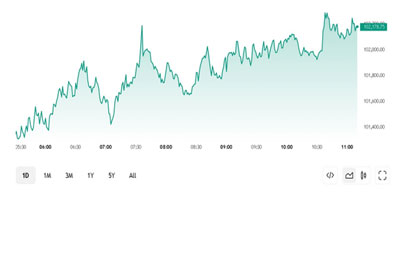

Bitcoin's technical indicators reveal crucial levels that traders should watch:
• Resistance Levels: The next major resistance levels stand at $112,000 and $120,000. If Bitcoin breaks above these, a further rally toward $150,000 could be in play.
• Support Levels: If a correction occurs, key support zones lie at $100,000 and $94,000. A drop below these levels might trigger a bearish trend.
Analyzing on-chain data provides deeper insights into market behavior:
• Whale Accumulation: Large BTC holders (whales) have increased their positions, signaling long-term confidence.
• Exchange Reserves: Bitcoin held on exchanges is at a multi-year low, indicating that investors are opting for self-custody rather than selling.
• Derivatives Market Data: Open interest in BTC futures contracts has surged, hinting at increased institutional participation.
• If BTC successfully holds support at $100,000, it could signal a strong buying opportunity.
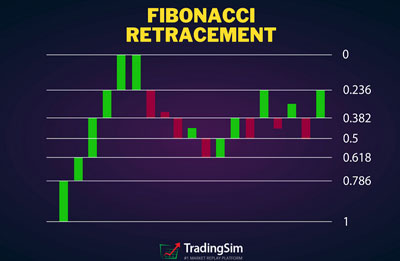
• Fibonacci retracement levels suggest that buying near the 0.618 level (around $98,000-$102,000) could be optimal.
• Watch for ETF approvals and institutional inflows as catalysts for further price appreciation.
• If Bitcoin approaches $120,000-$130,000, consider taking partial profits.
• Monitor macroeconomic data, including inflation reports and Fed rate decisions, as negative news could trigger sell-offs.
Use trailing stop losses to secure gains while allowing for further upside potential.
Bitcoin's record surge is not just a speculative run but a result of strategic regulatory shifts, economic factors, and increased adoption. As traders and investors, staying updated on U.S. policies, global economic trends, and technical market indicators will be crucial in making profitable decisions.
The market remains volatile, but for those who understand the macroeconomic and geopolitical landscape, Bitcoin presents one of the most promising opportunities of this decade. Whether you’re buying for long-term holding or looking for the right exit, keeping an eye on regulatory developments and market trends will be key to maximizing returns.
As Bitcoin matures, investors need to go beyond the basics and implement advanced strategies to maximize gains while minimizing risks. Here are some additional key areas to focus on:
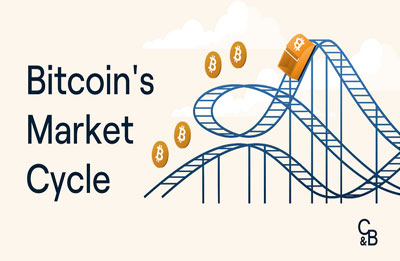
Bitcoin follows four-year cycles, mainly influenced by halving events. A typical cycle includes:
• Accumulation Phase: After a bear market, prices stabilize, and smart investors accumulate BTC.
• Bull Run: Strong upward momentum, fueled by institutional adoption and retail FOMO.
• Distribution Phase: Prices peak, and smart investors take profits while new buyers enter.
• Bear Market: Market correction follows, leading to an extended period of low prices.
Tip: Learn from historical cycles (2013, 2017, 2021) to predict future trends.
On-chain data provides insights into market movements:

• Whale Accumulation: Large wallets buying BTC is a bullish signal.
• Exchange Reserves: Decreasing BTC on exchanges suggests investors are holding (bullish).
• Miner Activity: If miners sell BTC aggressively, it can signal upcoming price corrections.
Tip: Use platforms like Glassnode, CryptoQuant, and Whale Alert to track on-chain metrics.
AI-driven tools and bots help execute trades automatically based on algorithms and market signals.
• Grid Trading Bots: Buy low and sell high within a price range.
• Trend-Following Bots: Identify bullish or bearish trends and trade accordingly.
Tip: Don't fully rely on bots-manual supervision is crucial.


Even in a bullish market, BTC can experience sharp corrections. Hedging strategies can protect your portfolio:
• Stablecoins: Convert a portion of BTC to USDT or USDC to lock in profits.
• Inverse BTC ETFs: Profit when BTC price declines.
• Altcoin Diversification: Some altcoins outperform BTC during bull runs.
Tip: Always keep some cash or stablecoins ready to buy dips.
BTC markets are influenced by whale actions, institutional investors, and market makers. Watch out for:
• Fake Pump & Dumps: Sudden price spikes followed by sharp drops.
• Stop-Loss Hunting: Whales push prices down to liquidate leveraged traders before rebounding.
• FUD (Fear, Uncertainty, Doubt): Negative news often causes panic selling.
Tip: Don't fall for panic-driven market moves-always verify news from trusted sources.


Many investors fail because they get greedy. A good strategy is to:
• Set profit-taking levels at key resistance zones.
• Use the 80/20 rule-sell 80% of holdings during major rallies, hold 20% for long-term gains.
• Follow BTC's stock-to-flow model to predict price potential.
Tip: "Time in the market" beats "timing the market." Stay patient and stick to your plan.
• Stay Informed: Follow credible sources like CoinGecko, CoinMarketCap, and on-chain analytics platforms.
• Avoid Overtrading: Too many trades can lead to losses due to high fees and volatility.
• Be Ready for Corrections:A 30-40% correction in a bull market is normal-use these dips to accumulate.
• Learn & Adapt: Crypto evolves rapidly; continuous learning is essential for long-term success.
Bitcoin's 2025 outlook remains optimistic, but investors must stay disciplined, follow data-driven strategies, and manage risks wisely. Whether you're a long-term holder or an active trader, the key is to remain patient, informed, and prepared for market movements.
Would you like help analyzing BTC price trends or specific strategies for your investment goals?